
Quick Answer
Mental health reminders on phone work best when they're small, specific, and live somewhere you can't reflexively dismiss. A medication alert at the same time every day, a one-line therapy-prep prompt, a grounding cue on your lock screen — these survive because they don't ask you to perform when you're already depleted. The ones that fail are the long, vague, easy-to-swipe-away kind.
What 'Mental Health Reminders on Phone' Should Actually Cover
Mental health reminders on phone is a quiet category that the App Store under-serves. Most search results return either generic affirmations apps or full-blown mood trackers, but the everyday job is usually smaller and more practical: remembering to take a medication, prepping for a therapy session, knowing where your crisis resources are, or having a short grounding cue when anxiety spikes. These are the standing supports that make harder days workable — and they only help if you'll actually notice them in the moment they matter.
The World Health Organization's report on long-term therapy adherence found that, in developed countries, roughly half of people prescribed medication for a chronic condition don't take it as prescribed. Mental-health prescriptions are no exception — and a calmer reminder system is one of the few cheap, evidence-supported levers anyone can pull.
That number is the whole reason this category matters. The medication isn't the failure — the system around remembering it is. Most people set a generic notification, dismiss it on a busy Tuesday, and slowly drift out of adherence. The same pattern plays out with therapy homework, weekly check-ins, and crisis tools you forget you have. A good mental-health reminder system reduces the cognitive load of remembering to remember — which is exactly the load that gets heaviest when you most need the support.

5 Mental Health Reminders Worth Setting Up
Not every reminder helps. Five that consistently do — small, specific, and act-in-the-moment:
- •
A daily medication cue at the same exact time. Same trigger, same place (right after coffee, before bed) so it becomes a habit rather than a fight with your phone. Use Reminders with a time + location trigger, or pair the alert with a lock-screen note so missing the notification isn't fatal.
- •
A 'before therapy' prep prompt. Two hours before a session: one line — 'What do I want to bring to this?' Even one minute of mental prep changes how a session goes. Beats walking in cold.
- •
A weekly mood check-in. Sunday evening, three sentences in Notes or a mood-tracking app: how was the week, what helped, what didn't. Cheap to do; gives you a real record to bring to a clinician if things drift.
- •
A grounding cue for spike moments. Three slow breaths · Name five things you can see · Cold water on your wrists. A short, specific prompt you can act on in under a minute, ideally placed somewhere passive like the lock screen so you don't have to summon it.
- •
A crisis-resources card you can find in 5 seconds. The 988 Suicide & Crisis Lifeline (US), Crisis Text Line (text HOME to 741741), or your local equivalent — saved in Notes pinned to the top, or written into a lock-screen wallpaper. The job is findability, not memorization.
💡 Tip
Start with one, not five. Building a five-reminder system on a hard day is itself the kind of cognitive load mental-health reminders are supposed to reduce. Pick the single most-skipped thing — usually medication or therapy prep — and get that one stable for two weeks before adding the next.
Where Phone-Based Mental Health Reminders Get It Wrong
Here's the uncomfortable truth about most reminder systems for mental health on phone: they're notification-based, and notifications are losing. The average person is buried in alerts, so the brain learns to clear them on autopilot — including the ones that matter. Worse, a notification fires once and is gone; if you're mid-meltdown or mid-meeting, you swipe and never come back. The reminder ends up doing the opposite of its job — adding noise instead of providing a quiet anchor.
This is why moving the cue off the notification layer changes everything. NoteWall lets you put one steady mental-health reminder — 'Meds at 9' · 'Therapy prep · what do you want to bring?' · '988 if it's bad' — directly on your lock-screen wallpaper, where it sits passively every time you pick up the phone. There's no swipe, no snooze, no notification to dismiss in the wrong moment. It's the same principle that works for self-care reminders on iPhone and positive affirmations — the cue lives in your line of sight instead of competing with TikTok pings for your attention.

Build a Layer System, Not Another To-Do List
The strongest setup uses two layers — each for what only it can do. Notifications handle the strict timing; the lock screen handles the standing context that survives a dismissed alert:
- •
Notifications for time-bound triggers. Medication at 9, therapy at 4, sleep wind-down at 10. Use Reminders with strict time + location triggers, not vague 'someday' alerts that pile up.
- •
Lock-screen wallpaper for standing context. Use NoteWall to keep one steady cue on your wallpaper — your medication time, your crisis number, today's grounding prompt. This is the layer that catches you when a notification gets swiped on autopilot.
- •
A short note in Apple Notes for crisis access. Pin it. The contents: 988, Crisis Text Line, one trusted phone number, and one practical line you've written to yourself for a future bad day. Not glamorous; works.
- •
A weekly review of what actually fired. Five minutes on Sunday: did the meds reminder land? did the grounding cue help? Trim what didn't work. Reminder systems decay if you don't tune them.
⚠️ Reminders Are Support, Not Treatment
Phone reminders help with adherence and small daily resets. They are not a substitute for therapy, psychiatric care, or crisis intervention. If you're in distress, please contact a clinician or a crisis line — in the US, call or text 988 (Suicide & Crisis Lifeline), or text HOME to 741741 (Crisis Text Line). Internationally, findahelpline.com lists verified crisis lines by country. An app is a quiet supporter; people and care are the actual help.
Frequently Asked Questions
What's the best way to set up mental health reminders on phone?
Start with one specific reminder — usually medication or therapy prep — set it for the same time and place every day, and pair it with a passive lock-screen cue so a swiped notification doesn't end the loop. Get that one stable for two weeks before adding the next. Five reminders built in one afternoon almost always collapse.
Are notification-based mental health reminders effective?
Only partly. Notifications work for strict time triggers like medication alerts, but they're easy to dismiss on autopilot — especially on a hard day. Pairing them with a passively-visible cue (like a lock-screen note) catches the times a notification gets swiped without registering, which is when these reminders matter most.
Can a phone replace therapy or a crisis line?
No. Phone reminders are practical support — they help with adherence, prep, and small daily resets. They aren't treatment. For acute distress, please contact a clinician or a crisis line: 988 (Suicide & Crisis Lifeline) or Crisis Text Line (text HOME to 741741) in the US. Internationally, findahelpline.com has verified options.
What should I put in a lock-screen mental health note?
Keep it short and specific: one medication time, one crisis number, and one grounding cue you'd act on in 30 seconds ('Three slow breaths' or 'Name five things you can see'). Rotate the grounding line every week so it doesn't fade into wallpaper your brain learns to ignore.
Keep Reading: Self-Care Reminders on iPhone · Anxiety Management Apps for iPhone · Positive Affirmations on Your iPhone Lock Screen · ADHD Focus Tips — Pillar Guide
Photos by Liana S, Bruno Guerrero, and Arek Adeoye on Unsplash.
A Cue You Won't Swipe Away
Notifications get dismissed in half a second on the days that matter most. NoteWall puts your one steady mental-health reminder on your lock screen, where it stays visible without buzzing. Free to start.
Try NoteWall Free
Founder of NoteWall. Building tools that turn your lock screen into a productivity system. About →
You might also like
Gratitude Journal on iPhone Lock Screen: A One-Sentence Habit
A gratitude journal on your iPhone lock screen makes the habit small enough to actually keep. Here's how to set it up so it lasts past week three.
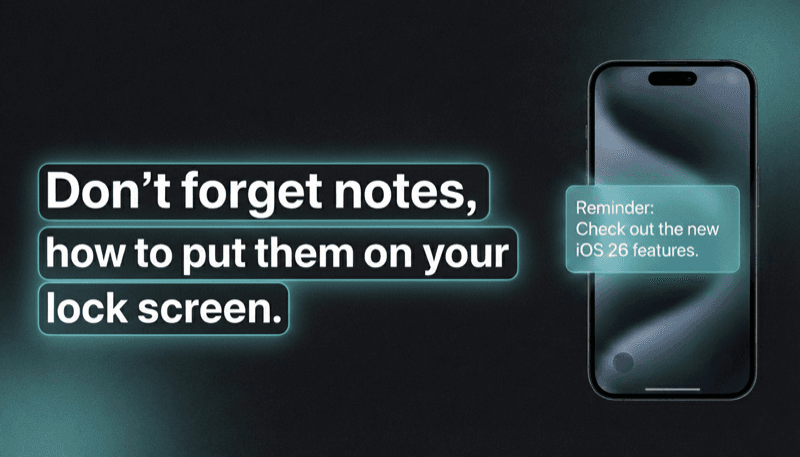
How to Show Reminders on iPhone Lock Screen (Without Notifications)
Want to see your tasks right on your lock screen? Learn how to display reminders on your iPhone lock screen without relying on notification banners.
Unlock Personalized Hydration: Your 2026 iPhone Lock Screen as a Smart Water Reminder Hub
Master intelligent hydration in 2026. Use your iPhone Lock Screen, Apple Health, Shortcuts, and top apps for personalized water reminders and seamless tracking.