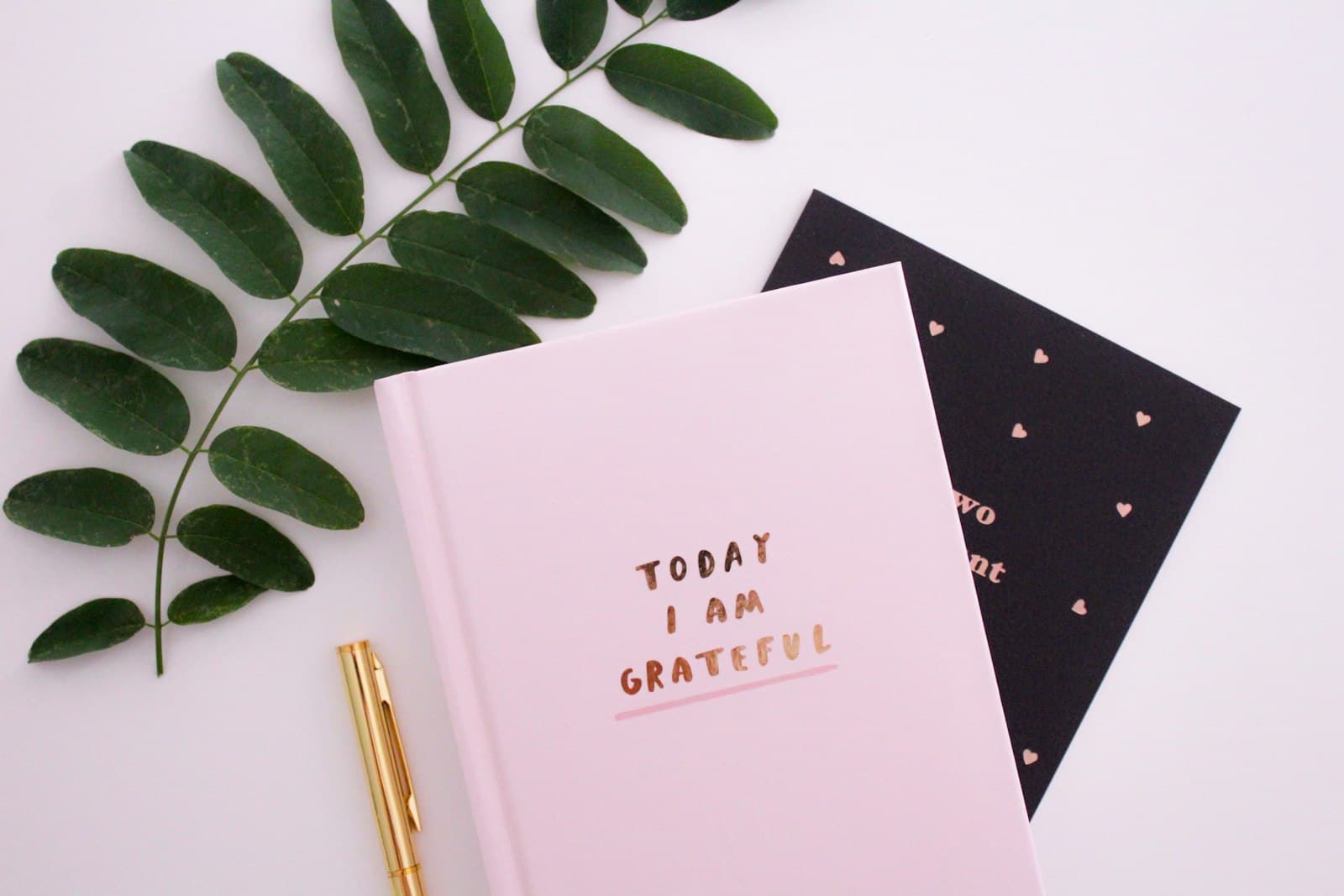
Quick Answer
A gratitude journal on iPhone lock screen is the smallest possible version of the practice: one sentence — sometimes one word — written directly onto your wallpaper, where you'll see it every time you check your phone. The point isn't to write more; it's to make the habit too small to skip. That's the version that survives the third week, when full-page journals quietly stop.
What a Gratitude Journal on iPhone Lock Screen Actually Looks Like
A gratitude journal on iPhone lock screen isn't a journal app, a stickered notebook, or a 'list ten things you love' template. It's a single line — 'Soup at lunch.' 'Mom called.' 'The bus was on time.' — sitting directly on your wallpaper, replaced once a day. The lock-screen version trades depth for durability: there's no app to open, no blank page to face, no streak to break. You write one thing in the morning, you see it forty times during the day, and the practice is essentially over before the second cup of coffee. That's not a downgrade from a full journal — it's a different tool that solves the problem most people actually have, which is adherence, not capacity to write.
A 2018 Indiana University study (Wong et al., Psychotherapy Research) following 293 university students found that participants who wrote gratitude letters showed significantly better mental-health outcomes about four weeks after starting — well before the brain-imaging changes appeared. The minimum effective dose is small; the durability of the habit is what matters.
That four-week window is the whole reason small wins. Most people quit a gratitude journal in week one or two — not because the practice doesn't work, but because they set up something elaborate and miss two days. The lock-screen version is engineered to not be skippable. You can't lose a one-sentence note the way you can lose a notebook habit, and you can't forget to open it because it's already there, on the screen you check more than any other surface in your life.

Why a Lock-Screen Practice Outlasts a Journal App
Gratitude journal apps and paper notebooks share the same structural weakness: they're pull surfaces. They only work when you remember to open them, and the act of opening — finding the icon, picking up the book, staring at a blank page — is friction the brain learns to avoid on busy or tired days. The lock screen flips that. The note is already on the surface you're picking up the phone for anyway:
- •
No app to open. The biggest predictor of habit drop-off is the number of steps before the habit can happen. Lock-screen notes have zero.
- •
No blank page. The previous day's line is still there until you replace it. Editing one sentence is psychologically easier than starting from scratch.
- •
Passive repetition. You'll see today's gratitude note 30–80 times before bed. That repetition does part of what re-reading a journal does, without re-reading anything.
- •
No streak to break. A missed day is a missed day, not a broken 73-day streak. Resilient habits don't depend on perfect runs.
- •
One-sentence ceiling. A wallpaper note literally won't fit a full journal entry. The cap forces the practice into its evidence-backed shape: small, frequent, specific.
💡 Tip
Write the gratitude in your own voice, not the prompt's. 'Soup at lunch' beats 'I am grateful for nourishment today.' The second one sounds like a self-help workbook; the first sounds like you. The specific, slightly weird ones are the ones your brain re-encounters later in the day and actually feels something about.

Where Most Gratitude Practices Quietly Die
Here's the failure pattern that hits almost every gratitude journal: you start strong on day one with a hardcover notebook and a real pen. By day five, you're writing 'good day, tired' just to keep the streak. By day eleven, you've missed a night and the streak feels broken, so you stop. The practice didn't fail you — the container did. A journal app has the same arc, except the blank page is on a screen. The fix isn't trying harder. It's making the unit so small that 'I didn't have time' stops being a believable reason to skip.
This is exactly where the lock-screen surface earns its place. NoteWall lets you put today's one-sentence gratitude directly on your wallpaper — no app, no blank page, no streak counter — so the friction between deciding to do it and doing it basically disappears. The practice fits into the ten seconds while the coffee brews. It's the same logic that works for self-care reminders on iPhone and positive affirmations — moving the cue out of an app and onto the surface you can't avoid is what makes a tiny habit actually stick.
Build the Tiny Practice in 3 Minutes
- •
Pick a morning anchor. Tie the practice to something you already do daily — first sip of coffee, first time you sit at your desk, the bus ride. Anchors do most of the remembering for you.
- •
Write one sentence. Past tense, specific, in your own voice. 'Coffee was good.' 'Kid laughed at the joke.' 'It rained while I was inside.' Length doesn't help. Specificity does.
- •
Put it on the wallpaper. Use NoteWall (or a Notes-screenshot workaround while you're trying the idea) to set the line as your lock-screen wallpaper. The note replaces tomorrow morning.
- •
Don't track it. No streak app, no calendar X, no habit-tracker badge. The practice should feel weightless. If you skip a day, you just write the next morning's line. Streaks make tiny habits collapse.
- •
Review on Sunday. Once a week, take a minute to look back at the past seven lines (just write them down somewhere, no system required). You'll notice patterns about what actually nourishes you — which is the real long-term payoff.
The version of the gratitude journal that sticks is almost always smaller than the version you planned. Smaller container, lower drop-off, more days lived inside the practice.
Common Gratitude-Journal Mistakes to Avoid
- •
Starting with three things per day. Three was the protocol in the original research, but it's also the most common drop-off point. Start with one for two weeks. Add the second after the habit is genuinely automatic.
- •
Writing during a 'gratitude-only' window at night. Night you is tired you. Move the practice to the morning anchor so it happens before the day starts spending your energy.
- •
Treating the streak as the goal. The benefit is in the days lived with the practice, not the unbroken count. Missing Tuesday doesn't undo Monday.
- •
Vague entries. 'Friends and family' is something everyone writes on day three. 'Anna texted back about Sunday' is something only you wrote — and your brain remembers it.
- •
Repeating the same line. Spotting a new specific each day is part of the practice. If you wrote 'coffee was good' three days running, you've started recording on autopilot — change the surface (write it about a person instead of a thing) and the habit re-engages.
Frequently Asked Questions
How do I set up a gratitude journal on iPhone lock screen?
Write one sentence each morning — past tense, specific, in your own voice — and put it directly on your wallpaper. Apps like NoteWall make this a five-second exchange every day; a Notes-screenshot works while you're testing the idea. Tie the writing to a fixed anchor like your first coffee so you don't have to remember the practice itself.
Does writing a tiny gratitude entry actually work?
Yes — the evidence is on consistency, not length. Indiana University research (Wong et al., 2018) found measurable mental-health gains in roughly four weeks of writing. The shorter the entry, the more likely you'll still be writing four weeks in, which is the whole point.
Is a lock-screen note enough, or do I need a real journal?
For most people, a lock-screen note is plenty. A full journal is better if you want a long-term record to re-read on hard days; a lock-screen note is better if you've quit a paper journal before. Many people run both: the lock-screen note is the cue, the journal is the storage.
How long should each gratitude entry be?
One specific sentence. 'Soup was warm.' 'Sat outside for 10 minutes.' Specificity matters more than length — vague entries like 'family' or 'health' stop landing within a week. A wallpaper note's tight size cap naturally enforces this.
Keep Reading: iPhone Journal App vs Lock Screen Notes · Positive Affirmations on Your iPhone Lock Screen · Self-Care Reminders on iPhone · ADHD Focus Tips — Pillar Guide
Photos by Gabrielle Henderson, Vanburn Gonsalves, and Khoiru Abdan on Unsplash.
The Smallest Version That Actually Sticks
Full gratitude journals get abandoned by week three. NoteWall puts a one-sentence gratitude directly on your wallpaper, so the habit is too small to skip. Free to start.
Try NoteWall Free
Founder of NoteWall. Building tools that turn your lock screen into a productivity system. About →
You might also like
iPhone Journal App vs Lock Screen Notes: When to Use Each
Wondering whether to use an iPhone journal app or lock screen notes for daily reflection? They solve different problems. Here's an honest guide to which fits when.
Unlock Personalized Hydration: Your 2026 iPhone Lock Screen as a Smart Water Reminder Hub
Master intelligent hydration in 2026. Use your iPhone Lock Screen, Apple Health, Shortcuts, and top apps for personalized water reminders and seamless tracking.
Never Miss a Dose: Your iPhone Lock Screen as a Smart Medication Reminder Hub in 2026
Transform your iPhone lock screen into an indispensable medication reminder hub in 2026. Leverage iOS features, AI-powered apps, and custom alerts for ultimate adherence.